

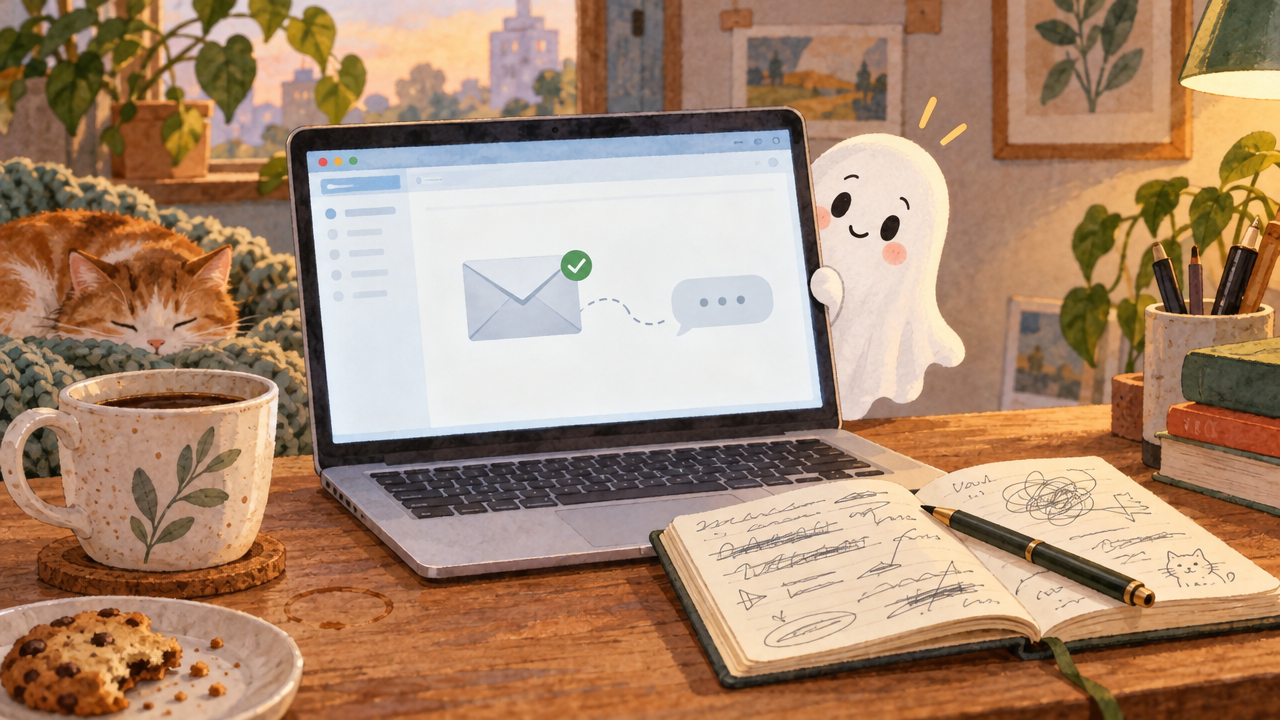
Most deals that go quiet after a great call lose momentum in the follow-up, not on the call. Promises get forgotten, context gets lost between back-to-back meetings, and the buyer's priorities move on. An AI sales assistant that captures action items with owners and drafts the follow-up straight after the call keeps that momentum alive.
Key takeaways
- A good call is only good if something happens in the next 48 hours.
- Back-to-back meetings plus notebook notes is how promises disappear.
- Deal momentum is fragile. Silence from you invites silence from them.
- An AI sales assistant helps most after the call: owners, dates and a ready follow-up.
You know the feeling.
The call went brilliantly. The buyer laughed at your jokes. They said, “This is exactly what we need.” You hung up and did a small fist pump at your desk.
Then nothing. One week. Two weeks. Your follow-up email sits there, unopened, like a party invitation nobody RSVPs to.
You've been ghosted. And it has happened to me more times than I'd like to admit.
Why do buyers go quiet after a good call?
Usually it isn't because they changed their mind. It's because the momentum leaked out somewhere between “great call” and “next step.”
Here's how it leaked for me. At LinkedIn I often had back-to-back meetings. I'd scribble notes in my notebook during the call, run straight into the next one, and by evening I'd be staring at my own handwriting trying to decode a note that looked something like “SL – deck – Fri??”
I missed context. I missed promises. And because the next meeting had already started, I had no time to prep for the one after that either.
Meanwhile, the buyer had moved on to their own fires. When my follow-up finally arrived, late and a bit vague, the energy from the call was gone.
The 48-hour rule
A sales conversation is only useful if something happens after it. I think of the first 48 hours as the window where momentum is still warm.
In that window, three things need to happen:
- What you promised gets sent. The deck, the pricing, the security doc.
- What they promised gets a gentle nudge. “You mentioned looping in Priya from finance. Shall I send her a short summary?”
- The next meeting gets on the calendar. A date, not “let's catch up soon.”
Miss all three and you're no longer in a deal. You're in a waiting room.
What a good follow-up looks like
- A two-line recap of what they said in their own words
- What you'll send, and when
- What they agreed to do
- One clear next step with a date
No essays. Nobody reads the long ones. I know, because I used to write them.
How an AI sales assistant fixes the follow-up
This is the boring part of sales that AI is genuinely good at. An AI sales assistant listens to the call and, before you've even left the meeting, has:
- Written the notes
- Pulled out action items with a named owner and date for each
- Drafted the follow-up email
Sunnyside also reminds you during the call. Five minutes before the end, it lists what's still uncovered, what the buyer asked that went unanswered, and what you promised. So you can fix it while they're still on the line, not three days later. Next morning, a follow-up email is ready, and the deal updates can go straight to Slack and your CRM.
Prince Thomas, Co-Founder and CEO at MetaShot, said it better than I can: “Sunnyside live assist has improved my meeting prep, delegation and followups are much easier now.”
You can try it free. Your notebook can go back to being a notebook.
Next in the AI sales assistant series: Three Humans, Three Bots: Should Your Sales Call Assistant Join the Meeting?.
Frequently asked questions
Why do prospects ghost after a good sales call?
Most often, momentum is lost in the follow-up. Promises are forgotten, the recap arrives late or vague, or no next meeting was booked. The buyer's priorities move on to other urgent work. Following up within 48 hours with what you promised and a dated next step greatly reduces the chance of silence.
How soon should you follow up after a sales call?
The same day if possible, and within 48 hours at most. Send what you promised, confirm what the buyer agreed to do, and propose a specific date for the next conversation. A short, specific follow-up works better than a long summary.
What should a sales follow-up email include?
A brief recap of the buyer's key points in their own words, what you will send and when, what they agreed to do, and one clear next step with a date. Keep it short enough to read on a phone between meetings.
How does an AI sales assistant help with follow-ups?
It captures the conversation, pulls out action items with named owners and dates, and drafts the follow-up email so the rep only needs to review and send it. Some assistants also flag unanswered questions and promises before the call ends, so gaps can be closed while the buyer is still there.