

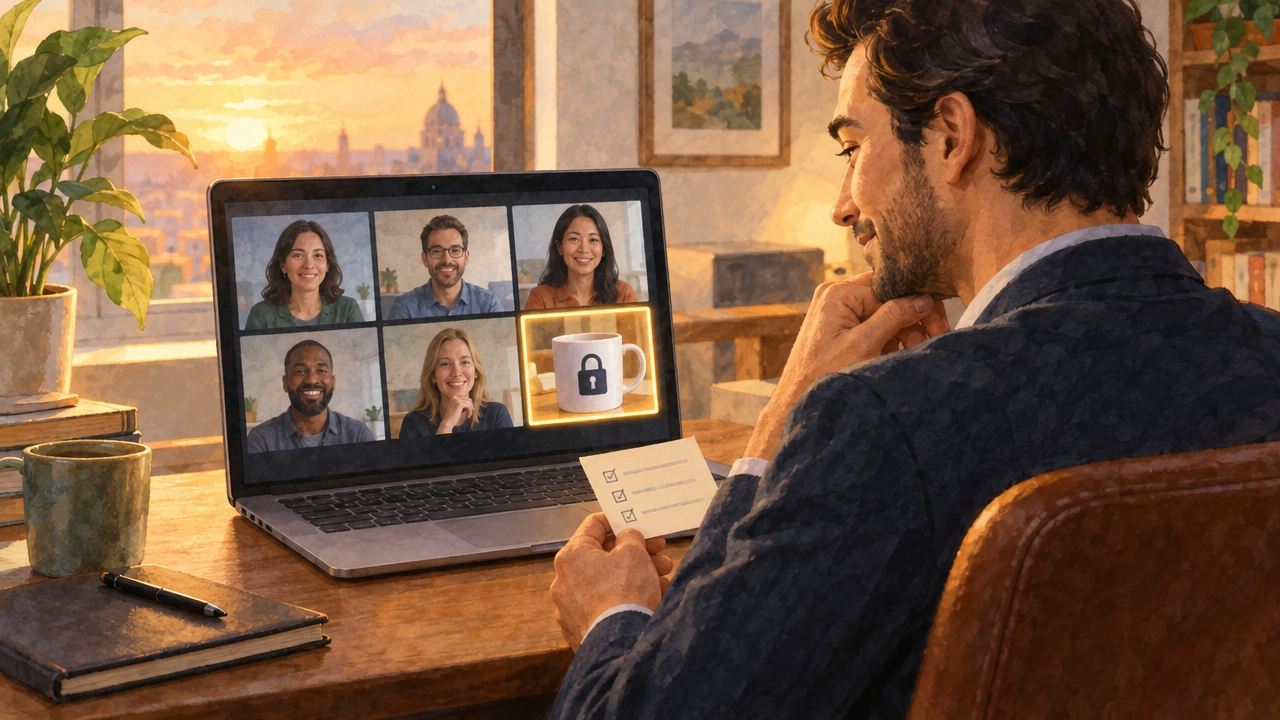
To handle a security question on a sales call, don't guess and don't stall. Ask what's driving the question, answer only what you know is documented, and commit to a written follow-up by a set date. A sales call assistant that pulls approved security answers onto your screen during the call means you'll need that follow-up far less often.
Key takeaways
- A security question usually means someone new has joined the deal, often IT or compliance.
- Guessing on security is the fastest way to lose trust you spent three calls building.
- “Let me confirm” works once. With a date and a name attached, it works every time.
- An AI sales assistant helps most when it answers only from your approved security material.
I'll be honest. For years there was a small prayer I said on sales calls.
Please don't ask me anything more technical.
I was selling Marketing Solutions at LinkedIn. The demo would be going well, the brand manager would be nodding, and then someone from their IT team would unmute. “Where exactly is our data stored? Who on your side can access it?”
Suddenly I sounded a little less confident. Not because I hadn't prepared. Because nobody can remember every security detail of a product that keeps changing. And I hated, really hated, being seen as someone who didn't know his own product. In B2B, trust and credibility are everything. That one wobbly answer can undo three good calls.
Why do security questions feel so much harder?
Because they're not really about features. They're about risk.
When a buyer asks about pricing, the worst outcome is a negotiation. When they ask about data residency, encryption or access controls, a wrong answer can end up in a contract, a compliance review or someone's very uncomfortable meeting with their boss.
There's also a signal hiding in there. A security question often tells you who just joined the deal. Last call it was the marketing head. Today, IT is quietly in the room. That's a good sign: the deal is getting serious. It's also the moment you can least afford to wing it.
What should you say when you don't know the answer?
Use a simple four-step pattern:
- Ask what's behind it. “Great question. Is this for a specific policy or a questionnaire you're working through?”
- Say what you know for sure. “We're GDPR compliant and use AES-256 encryption.”
- Be plain about the edge. “I want to confirm the backup location rather than guess on something your security team will rely on.”
- Commit to a date and an owner. “You'll have it in writing from our security lead by Thursday.”
That last step matters more than people think. An honest “I'll confirm” followed by a fast, written answer builds more trust than a confident guess. Our field guide to handling sales objections covers the same habit for the other objections you'll hear.
Never guess on these
- Where data is stored, including backups
- Certifications and their exact status (“in progress” is not “certified”)
- Who can access customer data
- Retention and deletion policies
If you're not sure, the honest answer is the safe answer.
The other side of the table
Here's the funny part. Now that I run Sunnyside, I'm on the receiving end. Buyers' security teams question us. And I completely understand where they're coming from. They're protecting their company, and they've heard plenty of vague answers.
The difference is that this time I'm not praying. Sunnyside sits on my screen during those calls and shows the approved answer from our own security material, with the source named. So I can stay in the conversation instead of hunting through a PDF while trying to look calm.
How a sales call assistant helps with security questions
A sales call assistant listens to the live call and shows you relevant answers on your own screen. For security questions, three things matter:
- It answers from your approved material. Your security and compliance answers, not the open internet.
- It shows the source, so you can trust it at a glance.
- It stays quiet when it doesn't know. On a security call, silence beats a confident wrong answer.
Sunnyside does all three. It runs on your computer, never joins the meeting, and five minutes before the end it lists what went unanswered and what you promised, so the follow-up actually happens. If you sell into security-heavy buyers, see how it works in cybersecurity sales.
You can try it free.
Take my word for it: it's a lot better than praying.
Next in the AI sales assistant series: Your AE Doesn't Need to Become an SE. They Need an AI Sales Copilot..
Frequently asked questions
How do you answer security questions on a sales call?
Ask what's driving the question, share only what you know is documented, and commit to a written follow-up with a named owner and date for anything you're unsure of. Never guess on data storage, certifications, access controls or retention policies, because those answers often end up in contracts and compliance reviews.
What does it mean when a buyer suddenly asks security questions?
It usually means someone new has joined the evaluation, often IT, security or compliance. That's a sign the deal is moving forward. Ask who else is involved, offer to send your security documentation, and consider bringing a technical expert to the next call.
Can an AI sales assistant answer security questions?
It can help, if it answers only from your company's approved security and compliance material and shows the source of each answer. The rep should still use judgement and never commit to anything the documentation doesn't support. A good assistant stays silent when it has no reliable answer.
Is it okay to say “I'll get back to you” on a security question?
Yes, as long as it comes with a specific date and owner. A vague promise reads as uncertainty. A precise one, such as a written answer from your security lead by Thursday, shows you take the buyer's risk seriously.