

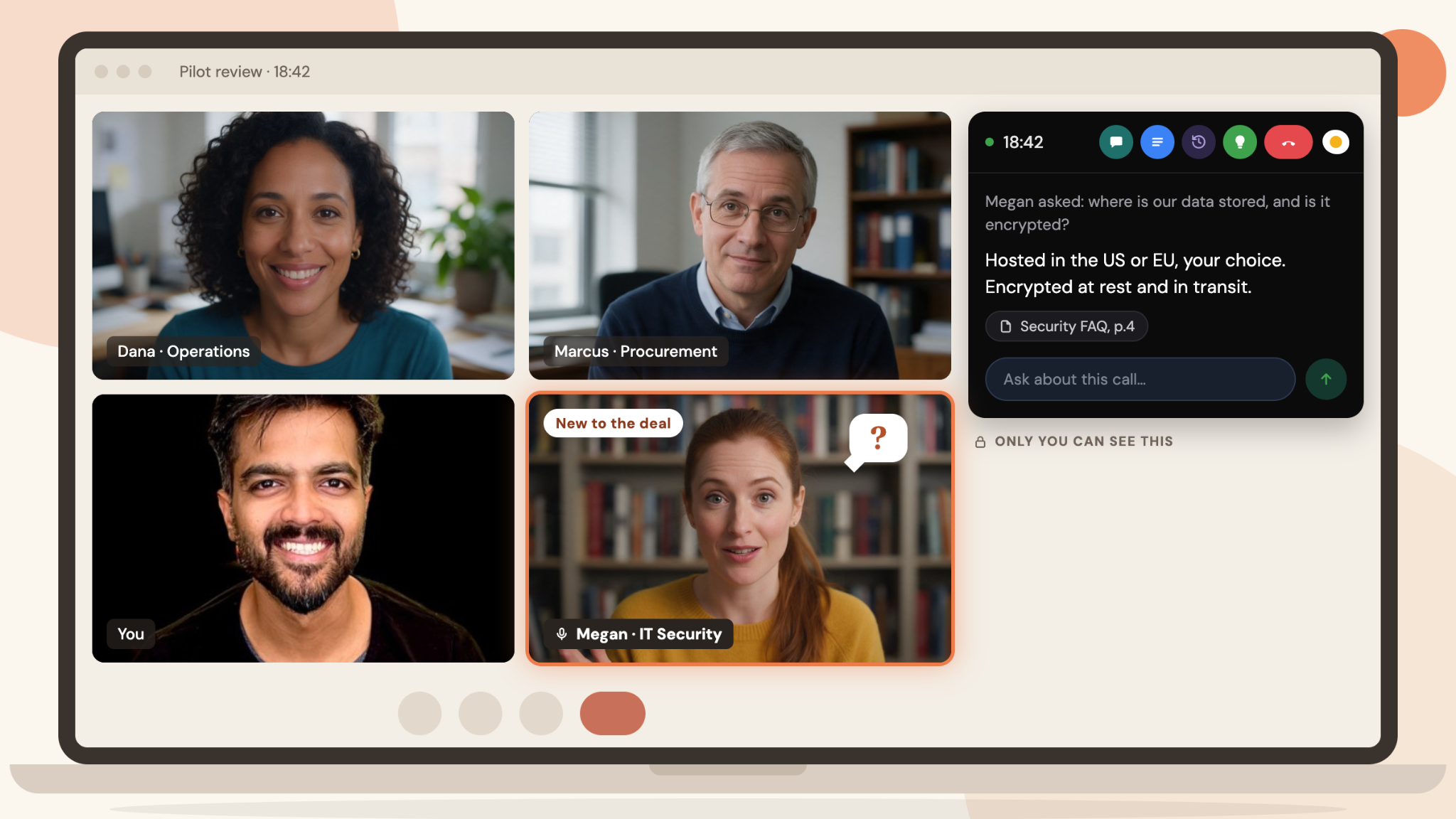
When a buyer asks a security or pricing question on a sales call, answer what is already documented, give the structure even if you can't give the number, and hand anything contractual to the right person with a clear date. Then ask who raised the question. It usually means IT, finance or procurement just entered the deal.
The moment every rep knows
The demo is going well. Your champion is nodding. Then someone you haven't met before unmutes. "Quick one. Are you SOC 2 Type II? And where is our data stored?"
Or the other version. "What does this look like for 400 seats?"
You know the answer exists. In a security doc. In a pricing sheet. In a Slack thread from last month. Just not in your head, not right now.
So you say it. "Let me get back to you."
Why "let me get back to you" costs more than it sounds
I dreaded saying that line.
In my years at LinkedIn, I said it more often than I'd like to admit. Sometimes it was the right answer. But when I said it because I simply didn't know, I could almost hear what the customer was thinking. "Does this person really understand the product?" Say it twice in one call and you can feel your credibility slipping.
In B2B sales, the customer isn't only buying your product. They're deciding whether they trust you enough to work with you. One unanswered question won't kill a deal. Repeated uncertainty slows it down. And deals rarely die loudly. They just go quiet.
You also get less time with the buyer than most reps think. Gartner's research found that B2B buyers spend only about 17% of their buying journey meeting potential suppliers. When they compare several vendors, any one rep may get just 5 to 6% of that time. When a buyer gives you that time, the answers they need should arrive inside it.
A security or pricing question tells you who just joined the deal
This is the part most advice misses.
A security question usually means IT or the security team now has a say. A question about volume pricing or payment terms usually means finance or procurement is getting involved. Gartner puts a typical buying group for a complex B2B purchase at six to ten decision makers. So the question isn't only something to answer. It's a signal.
After you answer, ask one more thing: "Who on your side will be reviewing this?"
That question has told me more about a deal than most perfect answers. It shows you who you haven't met yet, and who could quietly say no.
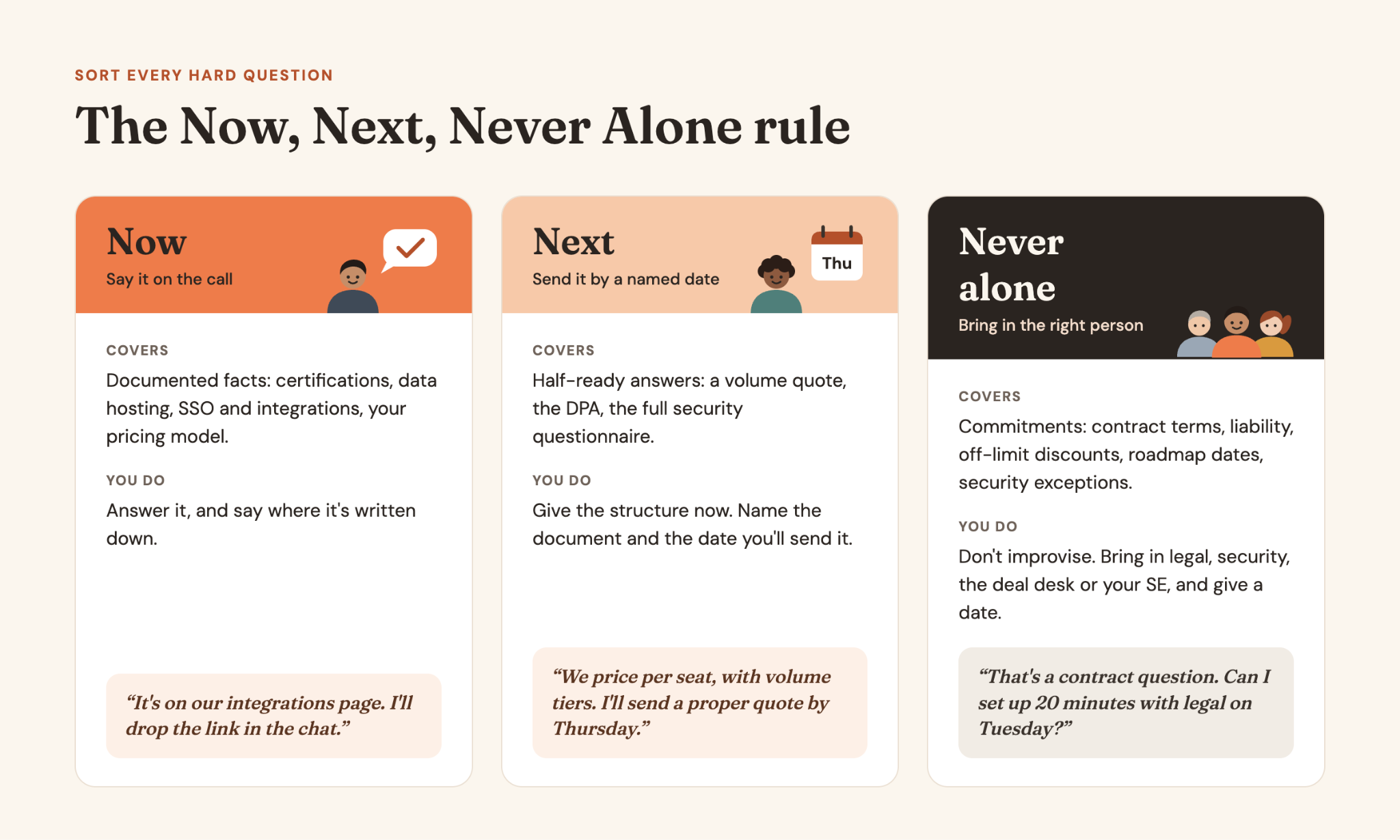
The Now, Next, Never Alone rule
Not every hard question deserves the same response. I sort them into three buckets.
What "Now" sounds like
"Yes, we support SAML SSO with Okta. It's on our integration page. I'll drop the link in the chat."
Only say what you've seen written down. If you're not sure whether it's SOC 2 Type I or Type II, don't pick one. That's how a rep creates a written record that legal later has to walk back.
What "Next" sounds like on pricing
Pricing is where reps say either too much or too little.
"I can't discuss pricing" sounds like you're hiding something. An improvised number is worse. It becomes the anchor for the whole negotiation.
The middle path works: "We price per seat, with volume tiers. At 400 seats you'd be in our enterprise band. I'll send you a proper quote by Thursday."
Structure live. The number in writing. If pricing turns into a real objection, our field guide to handling sales objections covers what to do next.
What "Never alone" sounds like
"That's a contract question, so I want our legal team to answer it properly. Can I set up 20 minutes with them on Tuesday?"
A clear handover with a name and a date keeps momentum. A vague "I'll check" loses it.
One warning about the Next bucket. It only works if the promise actually gets kept. I've lost count of the great calls where both sides agreed on next steps, then three days passed, everyone got busy, and nothing happened. Write every "I'll send it by Thursday" down before the call ends.
Why reps don't know answers their company already knows
Here's what frustrated me most as a rep. The answer usually existed.
Our solutions experts had answered the same question on another call. The security doc had it on page four. Someone on the team knew it by heart. The company knew. I didn't, in the four seconds I had to respond. I used to secretly pray: don't ask me more technical questions.
I don't think that makes a rep bad at the job. Products change every quarter. Pricing changes. Buyers show up having done more research. Salesforce's State of Sales research found reps spend only about 28% of their week actually selling. The rest goes to admin, internal meetings and chasing information. Not much time is left to memorise a security whitepaper.
Where real-time AI helps, and where it shouldn't
This gap is a big part of why I started Sunnyside.
Sunnyside's live call assist runs on your computer during the call. It never joins the meeting as a bot. When a buyer asks something, it shows you an answer from your own material: product docs, pricing and packaging, security and compliance answers, battlecards and past calls with this buyer. Each answer shows where it came from, so you can check it before you say it. If it doesn't know, it stays quiet.
Before the call, Sunnyside's prep can flag things like "IT wants the security questionnaire before they sign", and show who in the buying group hasn't been on a call yet. After the call, the notes list what you promised and by when, so the Next bucket doesn't get forgotten.
What AI should not do is make commitments. Contract terms, custom discounts and security exceptions need a person with the authority to say yes. A good tool helps with the Now questions and keeps track of the Next ones. The Never Alone questions stay with your people.
A short checklist before your next call with IT or finance
- Have the links to your trust centre, security docs and DPA ready to paste
- Know how your pricing model works, even if you can't quote the numbers
- Know who your legal, security and deal desk contacts are, and how fast they reply
- When someone new asks a question, find out what part they play in the decision
- Before the call ends, read back every promise you made, with a date
If you want to see what this looks like on a real call, try Sunnyside on your next one.
Frequently asked questions
Should sales reps answer security questions on a sales call?
Yes, when the answer is already documented. A rep can safely share certifications the company holds, where data is hosted and which integrations are supported, and point to where it's written down. Anything about certification scope, exceptions or contract terms should go to the security or legal team, with a clear date for the answer.
What should you say when you don't know the answer on a sales call?
Be specific about what happens next. Name the exact document or person who will answer, and the day it will arrive, for example "our security lead will send the data residency details by Thursday". Then note the promise and keep the call moving. A precise follow-up keeps trust. A vague "let me check" loses it.
How do you answer pricing questions without giving a number?
Explain the structure instead of the figure. Tell the buyer what you charge by (seats, usage or sites), whether volume tiers exist, and which band their size falls into. Then commit to a written quote by a named day. Avoid improvised numbers, because the first number said out loud usually becomes the anchor for the whole negotiation.
Why do security and pricing questions slow deals down?
They usually come from new people in the buying group, such as IT, security, finance or procurement. These people need exact answers they can check later. When the rep defers repeatedly, the conversation moves to email, momentum fades, and the new stakeholders form their view without the rep in the room.
When should an AE bring in a Sales Engineer or legal?
Bring in a Sales Engineer for architecture, integration design, proofs of concept and anything that needs hands-on product depth. Bring in legal for contract terms, liability, data processing agreements and security exceptions. Bring in the deal desk for discounts outside your approval. Give the buyer the person's name and a date.
Can AI answer security questions during a sales call?
It can surface answers that already exist in your company's documents, such as certifications, data hosting and supported integrations, while the buyer is still talking. The rep should check the source before repeating it. AI should not make commitments on contracts, discounts or security exceptions. Those need a person with authority.